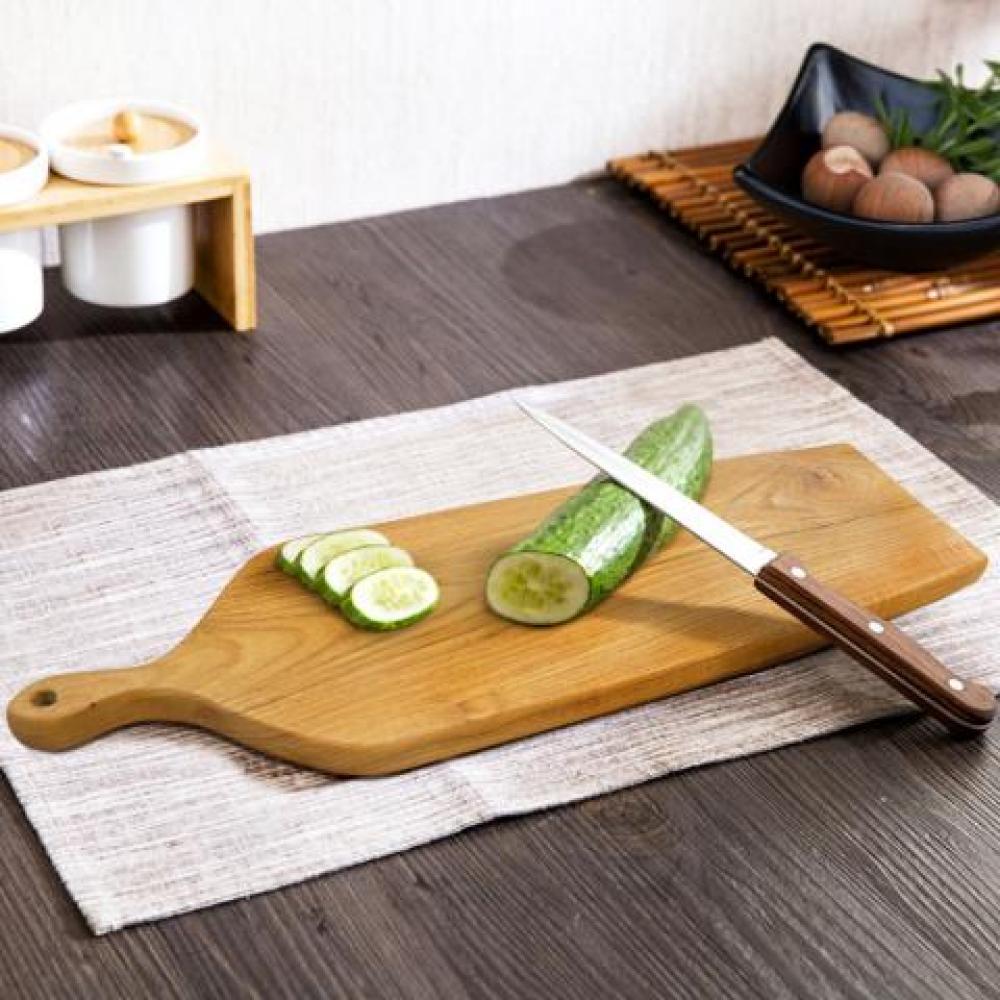
The Ultimate Kitchen Companion: A Comprehensive Review of the CUTTING BOARD 3 (Paddle Model)
Introduction: The Heart of the Kitchen
Every culinary enthusiast knows that the secret to a great meal lies not just in the ingredients and the recipe, but in the tools used to bring them together. Among the myriad gadgets, pans, and appliances that crowd modern kitchens, one humble tool remains the absolute cornerstone of preparation: the cutting board. It is the silent partner in every chopping, slicing, and dicing endeavor. Yet, so often, we settle for flimsy plastic boards that warp, glass boards that ruin our knife edges, or cheap wooden boards that splinter and harbor bacteria.
Enter the CUTTING BOARD 3 (Model: Paddle), a masterclass in kitchenware engineering and aesthetic design. Crafted from premium teak wood and finished with food-safe mineral oil, this board transcends its utilitarian purpose to become a statement piece in your kitchen. Measuring 2.00 cm in height, 50.50 cm in width, and 15.00 cm in depth, it strikes the elusive balance between generous workspace and graceful handling. In this exhaustive review, we will delve deep into the craftsmanship, functionality, aesthetics, and overall value of the CUTTING BOARD 3, exploring why it deserves a permanent spot on your countertop.
First Impressions: Aesthetics and Design Philosophy
When you first unbox the CUTTING BOARD 3, the immediate impression is one of organic elegance. Unlike mass-produced synthetic boards that scream "factory floor," this piece whispers "artisanal craftsmanship."
The Paddle Model: Form Meets Function
The defining characteristic of this particular model is its paddle shape. Featuring an elongated body that seamlessly transitions into a comfortable handle, the paddle design is a stroke of genius. It solves one of the most common annoyances in food prep: transferring chopped ingredients from the board to the pan or bowl. With a traditional rectangular board, you often find yourself awkwardly clutching the edges, risking spills. The handle of the CUTTING BOARD 3 allows for a secure, ergonomic grip, enabling you to lift the board and slide your freshly diced vegetables directly into a sizzling skillet with effortless grace.
Visual Appeal and the Teak Grain
The choice of teak wood gives the board a rich, warm, and inviting color palette. Teak is renowned for its striking grain patterns, ranging from deep golden browns to subtle amber hues, often accented by darker streaks. No two boards are identical, meaning the pattern on your kitchen counter is entirely unique to you. The surface is treated with a natural mineral oil finish, which not only protects the wood but also accentuates the natural luster of the grain, giving it a soft, matte sheen that catches the kitchen light beautifully.
Material Matters: Why Teak is King
When investing in a wooden cutting board, the material is everything. You need a wood that is durable enough to withstand daily knife work, gentle enough not to dull your expensive blades, and naturally resistant to moisture and bacteria. Teak checks every single one of these boxes, and then some.
Natural Oils and Water Resistance
Teak is a tropical hardwood famous for its exceptionally high natural oil content. Unlike maples or walnuts, which require heavy conditioning to resist moisture, teak is naturally water-repellent. This intrinsic characteristic makes the CUTTING BOARD 3 remarkably resilient against warping, cracking, and rotting—common pitfalls of inferior wooden kitchenware. When you wash the board, water beads up on the surface rather than soaking deep into the fibers. This moisture resistance also means that bacteria, mold, and mildew have a much harder time finding a foothold, ensuring a more hygienic food prep surface.
Knife-Friendly Surface
Ask any chef about their worst nightmare, and they will likely mention a dull knife. Hard surfaces like glass, granite, and even bamboo can wreck the edge of a high-carbon steel knife in a matter of weeks. Teak, while incredibly durable, possesses a natural give that cushions the blade upon impact. When your knife strikes the CUTTING BOARD 3, the wood fibers gently part rather than forcefully opposing the blade. This preserves the sharpness of your knives, meaning you will spend less time sharpening and more time cooking.
Dimensions and Ergonomics: The Anatomy of the Board
Size matters immensely when it comes to cutting boards. Too small, and you are constantly fighting for space, dealing with tumbling onions and rogue cherry tomatoes. Too large, and the board becomes an unmanageable behemoth that is impossible to wash in a standard sink and cumbersome to store.
The Perfect Proportions
The CUTTING BOARD 3 hits the "Goldilocks" zone of kitchen dimensions:
- Height (Thickness): At 2.00 cm, the board has a substantial, heavy-duty feel. It is thick enough to resist bending under pressure when you are carving a Sunday roast or kneading small batches of dough, yet not so heavy that it feels like a chore to pick up.
- Width: Spanning 50.50 cm, the board offers an expansive horizontal workspace. You can easily prep multiple ingredients simultaneously—say, dicing onions on one end and mincing garlic on the other—without them mingling prematurely.
- Depth: With a depth of 15.00 cm, it is intentionally streamlined. This makes it exceptionally well-suited for narrower countertops, apartment kitchens, or crowded prep stations. While it is narrower than a square butcher block, the 50.50 cm length more than compensates, giving you a linear workspace that fits comfortably in front of you without blocking your entire kitchen island.
The Handle Advantage
As mentioned earlier, the paddle design incorporates a sturdy handle. The proportions of the handle are well-thought-out, fitting naturally into the palm of an adult hand. Furthermore, many users choose to drill a small leather strap or loop through the handle, transforming the board into a hanging kitchen display piece when not in use. This saves precious counter space and turns functional cookware into kitchen wall art.
Daily Usability and Performance in the Kitchen
How does the CUTTING BOARD 3 actually perform when the rubber meets the road—or rather, when the knife meets the wood? We put this board through a battery of everyday culinary tests to evaluate its real-world performance.
Vegetable Prep and Mincing
Chopping vegetables is the most frequent task for any cutting board. The teak surface provides a satisfying, muted "thump" with every drop of the chef’s knife. Because of the 50.50 cm width, there is plenty of room to stage whole carrots, celery stalks, and onions before breaking them down. The mineral oil finish creates a smooth glide, though there is enough friction to keep ingredients from sliding around uncontrollably.
Meat, Poultry, and Juices
Carving meat on a wooden board can sometimes be messy, but the natural water-resistance of teak shines here. While the board does not feature a deep juice groove (a deliberate design choice that preserves the clean lines of the paddle shape and maximizes flat workspace), the dense teak fibers prevent blood and meat juices from penetrating deeply into the wood. Cleanup is straightforward: a quick wipe down with warm, soapy water and a rinse takes care of even the messiest proteins.
Serving and Presentation
One of the hidden talents of the CUTTING BOARD 3 is its dual personality. Beyond being a prep station, the gorgeous teak grain and paddle shape make it an incredible serving platter. Imagine hosting a gathering and using this board as an artisanal charcuterie board. Arranging cheeses, cured meats, crackers, grapes, and nuts on its 50 cm span creates an impressive, rustic presentation that will undoubtedly draw compliments from your guests. It bridges the gap between kitchen tool and dining table centerpiece seamlessly.
Maintenance and Longevity: Keeping Your Board Pristine
A high-quality wooden cutting board is an investment. Like a fine leather jacket or a cast-iron skillet, it gets better with age—provided you give it the care it deserves. Fortunately, maintaining the CUTTING BOARD 3 is simple and straightforward.
The Mineral Oil Finish
The board comes pre-treated with a food-grade mineral oil finish. Mineral oil is odorless, tasteless, and completely safe for food contact. It acts as a barrier, locking in the wood’s natural moisture while keeping outside liquids out. Over time, as you wash the board, this oil will gradually dissipate. To keep your board looking vibrant and protected, you should reapply a coat of food-safe mineral oil (or a specialized beeswax and oil blend) every few weeks, or whenever the wood starts to look dry and pale. The process takes less than five minutes: simply apply the oil with a cloth, let it sit for 20 minutes, and buff off any excess.
Cleaning Dos and Don’ts
- DO: Wash the board immediately after use with warm water and a mild dish soap.
- DO: Dry it thoroughly with a towel and store it vertically to allow air circulation on all sides.
- DON’T: Ever put the CUTTING BOARD 3 in the dishwasher. The intense heat, prolonged water soaking, and harsh detergents will strip the natural oils, warp the wood, and ruin the board beyond repair.
- DON’T: Submerge it in the sink for extended periods. A quick wash is all it needs.
If cared for correctly, this teak paddle board will easily last for a decade or more, developing a rich patina that tells the story of every meal you have prepared on it.
Pros and Cons Analysis
To provide a balanced and objective review, let us weigh the strengths and potential limitations of the CUTTING BOARD 3.
The Pros:
- Exceptional Material: Premium teak wood is naturally
| cutting board 3 Detail | ||||||||||
|---|---|---|---|---|---|---|---|---|---|---|
| Dimension |
| |||||||||
| Model | Paddle | |||||||||
| Material | Teak | |||||||||
| Color | Mineral Oil | |||||||||