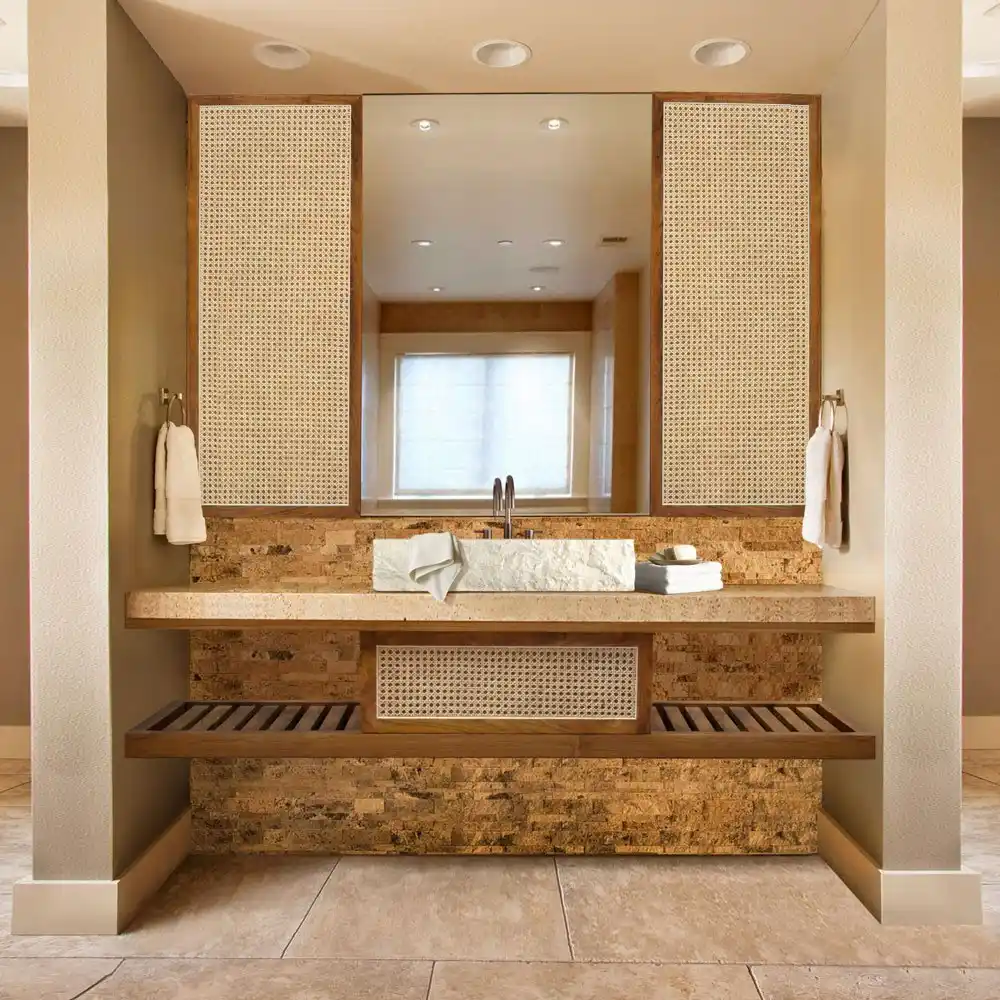
The Vanity Treatment Room is a freestanding furniture piece constructed entirely from solid teak wood, designed for grooming, personal care, and specialized treatment routines within residential or hospitality interiors. Teak, known scientifically as Tectona grandis, forms the structural core of this unit, providing a dense, oil-rich timber naturally resistant to moisture, humidity fluctuations, and wood-boring insects. This inherent material composition makes the furniture suitable for placement in high-moisture environments such as bathrooms, spa rooms, and private dressing suites without requiring synthetic sealants or heavy chemical treatments to maintain its structural integrity.
The exterior surfaces display the straight-grained, tightly knit texture characteristic of mature plantation-grown teak. Artisans have hand-sanded the wood to a fine, smooth finish that highlights the natural golden-brown hues and dark grain markings unique to the timber. Over time and with exposure to ambient light, the raw teak will gradually transition to a silvery-gray patina unless maintained with periodic applications of teak oil or clear wood sealer. The joinery employs traditional mortise-and-tenon construction methods, reinforced with hidden internal fasteners to ensure long-term stability under daily operational weight loads.
At the center of the unit’s physical layout is an integrated horizontal work surface designed to support cosmetic equipment, treatment trays, and daily grooming accessories. The countertop area is planed level and finished with a clear, moisture-resistant matte polyurethane coat that prevents water penetration, cosmetic staining, and oil absorption from spilled skincare products. Beneath the main work surface, the storage configuration includes a combination of pull-out drawers and a lower cabinet compartment enclosed by hinged solid teak doors.
The drawers operate on precision side-mounted wooden or metal glides, allowing for smooth, friction-free extension and retraction when accessing stored items. Each drawer box is assembled using dovetail joinery, a mechanical interlocking technique that resists pulling forces and prevents joint separation over years of repeated use. The drawer interiors are left unsealed to preserve the natural aromatic qualities of the wood and to prevent stored textiles or cotton products from absorbing synthetic chemical odors.
The lower cabinet section features vertical clearance sufficient for storing taller bottles, specialized treatment machinery, and bulk supplies. The cabinet doors are hung on heavy-duty brass or stainless-steel concealed pivot hinges, which allow the doors to swing open to a 110-degree angle for unobstructed interior access. Solid teak pulls are integrated directly into the upper edge of the drawer faces and cabinet doors, maintaining a clean, uninterrupted profile across the front elevation of the unit without protruding hardware that could snag clothing or accumulate grime.
Standing on four tapered square legs, the Vanity Treatment Room elevates the primary storage body approximately six inches off the floor level. This clearance facilitates easy cleaning underneath the furniture using standard vacuum cleaners or floor mops, preventing dust and moisture accumulation in hard-to-reach corners. Each leg is fitted with a subtle, adjustable nylon leveling foot concealed at the base, allowing the unit to remain stable and plumb on uneven tile, stone, or hardwood flooring surfaces.
Weighing approximately 85 kilograms, the substantial mass of the teak construction prevents shifting or sliding during active use of the top surface. The overall dimensions measure 120 centimeters in width, 60 centimeters in depth, and 85 centimeters in height to the top of the working surface, aligning with standard ergonomic counter heights for standing tasks. The interior drawer depths measure 45 centimeters front-to-back, accommodating standard organizational trays and dividers.
Maintenance requirements for this teak treatment station involve routine dry dusting with a soft microfiber cloth and occasional cleaning using a damp cloth with mild, pH-neutral soap. Abrasive scouring pads, chlorine bleach, and ammonia-based chemical cleaners must be avoided to prevent surface scratching and degradation of the natural wood fibers. Regular inspection of the hardware and hinges ensures long-term functional reliability, while periodic oiling maintains the deep color saturation of the teak grain for continuous daily operation in professional or domestic environments.
| Product Info | |||||||||||
|---|---|---|---|---|---|---|---|---|---|---|---|
| Dimension |
| ||||||||||
| Material | Teak | ||||||||||