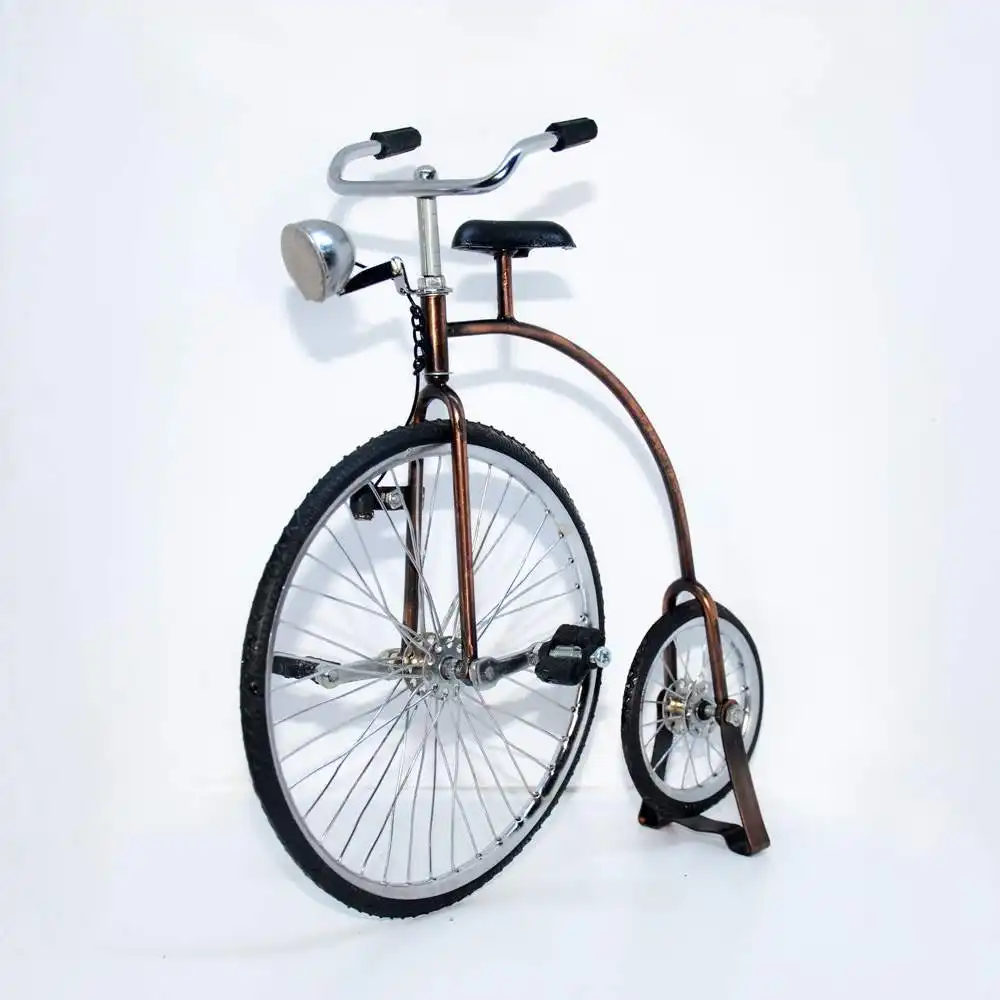
The SEPEDA AKROBAT is a miniature metal sculpture modeled after a vintage bicycle, constructed entirely from iron. Measuring 25.00 centimeters in width, 27.00 centimeters in height, and 12.00 centimeters in depth, the object occupies a compact footprint suitable for display on shelves, desks, or mantelpieces. The entire assembly weighs 1.62 kilograms, providing a substantial physical presence that prevents accidental tipping when placed on flat surfaces.
The primary material used in the fabrication of this piece is industrial iron, chosen for its structural rigidity and ability to hold fine welding details. Each component of the bicycle is rendered in metal wire, sheet, and rod stock, joined together through visible solder and weld points. The frame features a classic diamond geometry, complete with a simulated top tube, down tube, seat tube, and chainstays. The handlebars are curved downward in a drop-bar configuration, welded directly to the steering column, which allows the front fork and wheel assembly to remain fixed in a stationary forward position.
Attached to the central frame is a wire-formed saddle representing a traditional bicycle seat, positioned directly above the rear wheel axle junction. The wheels are constructed from concentric circular iron rings joined by numerous thin spokes radiating from a central hub. Unlike a functional bicycle, these wheels are solid decorative elements rather than rotating mechanisms, locked rigidly into the overall frame structure to maintain the integrity of the sculpture.
The defining characteristic of the SEPEDA AKROBAT design is the integration of a human figure performing an acrobatic maneuver in conjunction with the bicycle frame. A stylized metal silhouette representing an acrobat is welded directly to the handlebars and the upper frame tubing. The figure is depicted in an inverted handstand position, with arms extended downward to grip the handlebar grips and legs raised vertically into the air. This figure is sculpted from bent iron rods, capturing the contours of the torso, arms, and legs through minimalist linear metalwork.
The surface finish of the iron displays a textured, dark metallic coating that highlights the underlying material grain and the craftsmanship of the hand-welded joints. The matte coloration absorbs light rather than reflecting it, emphasizing the silhouette of the bicycle and the acrobat against surrounding backgrounds. The junctions where the individual metal pieces meet exhibit intentional weld buildup, revealing the manual assembly process rather than a seamless molded plastic finish.
Regarding maintenance and placement, the iron construction requires minimal upkeep beyond occasional dusting with a dry cloth. Due to the untreated or coated metal composition, exposure to high humidity or moisture may lead to surface oxidation over extended periods, making indoor placement the recommended environment. The base of the sculpture relies on the lower points of the bicycle tires and any integrated grounding elements to distribute the 1.62-kilogram weight evenly across a supporting surface.
The manufacturing process involves bending, cutting, and welding metal components by hand, resulting in slight individual variations in the weld patterns and wire angles from one piece to another. The proportions between the 27.00-centimeter height and the 25.00-centimeter width create a balanced square visual field, while the 12.00-centimeter depth provides enough physical separation between the front and rear wheels to ensure stability when standing upright. The combination of the bicycle anatomy and the suspended acrobatic figure results in a dense, solid-metal decorative object focused on mechanical and figurative metal art.
| Product Info | |||||||||||
|---|---|---|---|---|---|---|---|---|---|---|---|
| Dimension |
| ||||||||||
| Material | Iron | ||||||||||