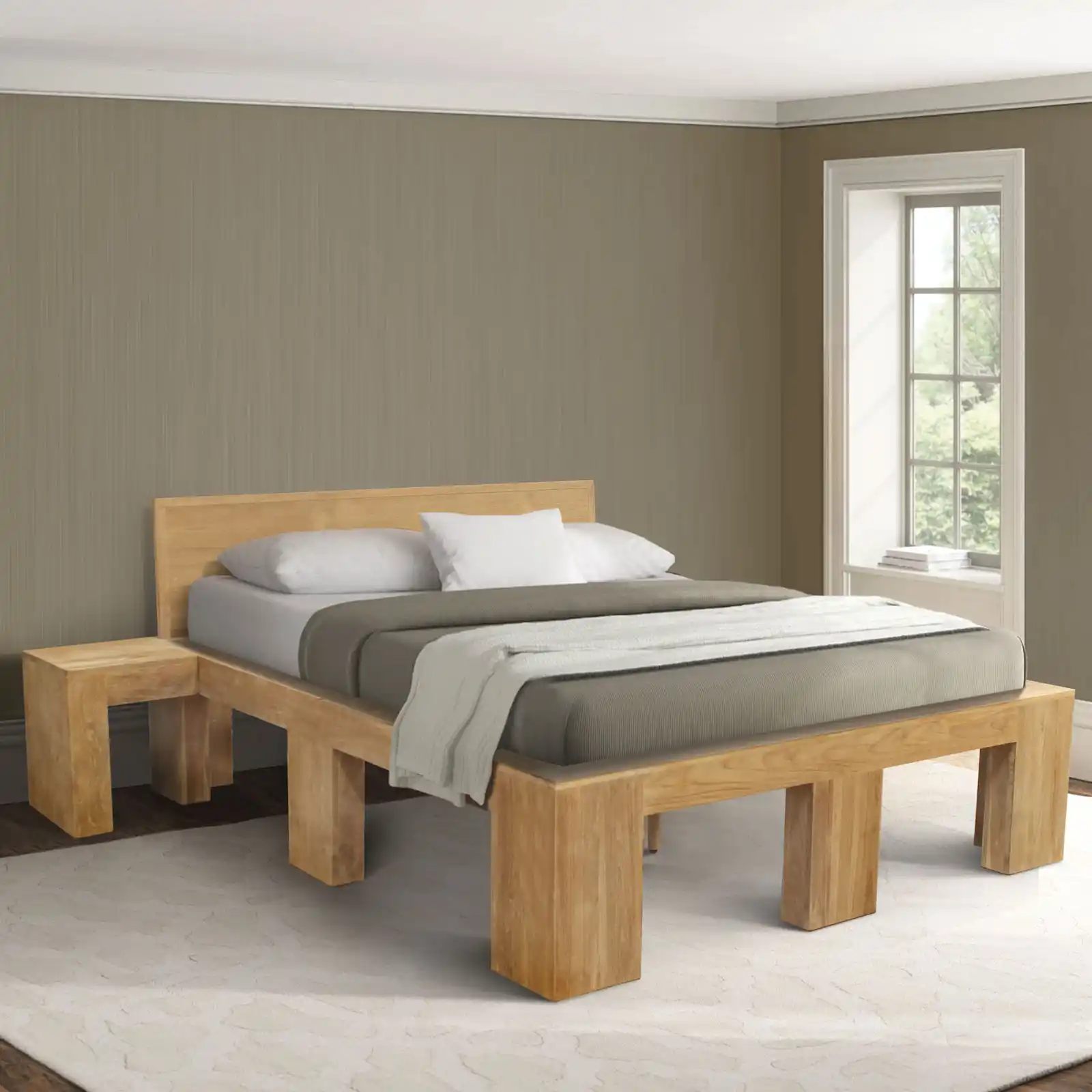
The 160×200 BED SQB WITH ASLOPE HEADBOARD AND BED SIDE is a substantial furniture piece constructed entirely from solid teak wood. Teak is a dense hardwood known for its high natural oil content, which provides inherent resistance to moisture, decay, and insect damage. The visible grain pattern of the wood features tight, straight lines with a warm, golden-brown hue that deepens naturally over time.
The main mattress platform measures 160 centimeters in width and 200 centimeters in depth, accommodating a standard queen-size mattress. The overall physical footprint of the bed frame extends beyond these mattress dimensions to integrate the attached bedside tables on either side of the structure. The total weight of the entire unit is 106.00 kilograms, reflecting the heavy-duty nature of the solid teak construction and the inclusion of the integrated side surfaces. The packaged volume occupies a CBM of 1.3700 cubic meters for freight and delivery planning.
The defining characteristic of this model is the aslope headboard. Unlike vertical headboards, this backrest leans backward at a measured obtuse angle, creating an inclined plane against which a person can rest. This sloped geometry alters the contact angle for the upper body, allowing users to sit up with support while reading or watching media without requiring supplementary pillows for lumbar positioning. The top edge of the headboard reaches a maximum height of 95.00 centimeters from the floor, anchoring the visual weight of the bed low to the ground.
Flanking the mattress platform are the built-in bedside surfaces, referred to as the bed side components. These are constructed as continuous extensions of the main bed frame assembly rather than standalone units. The integration ensures that the nightstands remain rigidly fixed at the exact height of the mattress base, eliminating movement or separation from the primary sleeping structure. These flat wooden surfaces provide designated space for bedside lamps, books, or personal items directly adjacent to the sleeping area.
The joinery utilizes traditional woodworking techniques designed to lock the heavy teak components securely together. Metal hardware is concealed within the internal frame to maintain a clean exterior appearance dominated by the continuous wood surfaces. The legs of the bed lift the main platform off the floor by a fixed clearance, allowing air circulation underneath the mattress slats while distributing the combined weight of the mattress, occupants, and the 106-kilogram frame evenly across the flooring surface.
Maintenance of the teak material requires minimal intervention due to the wood’s natural properties. Periodic dusting with a dry cloth removes surface particles, while occasional application of natural teak oil can preserve the original coloration if desired, though the wood will otherwise weather to a silvery-gray patina when exposed to direct sunlight over extended periods. The smooth-sanded finish of the wood presents a tactile surface devoid of rough patches or splintering, ensuring safe physical contact with skin and bedding materials.
The manufacturing process prioritizes structural rigidity to prevent creaking or shifting during movement. Each component, from the thick side rails to the solid panels of the aslope headboard, is dimensioned to withstand substantial load-bearing requirements. The assembly requires multiple steps due to the weight and size of the components, resulting in a permanent installation once bolted together in the bedroom.
| Product Info | |||||||||||
|---|---|---|---|---|---|---|---|---|---|---|---|
| Dimension |
| ||||||||||
| Material | Teak | ||||||||||