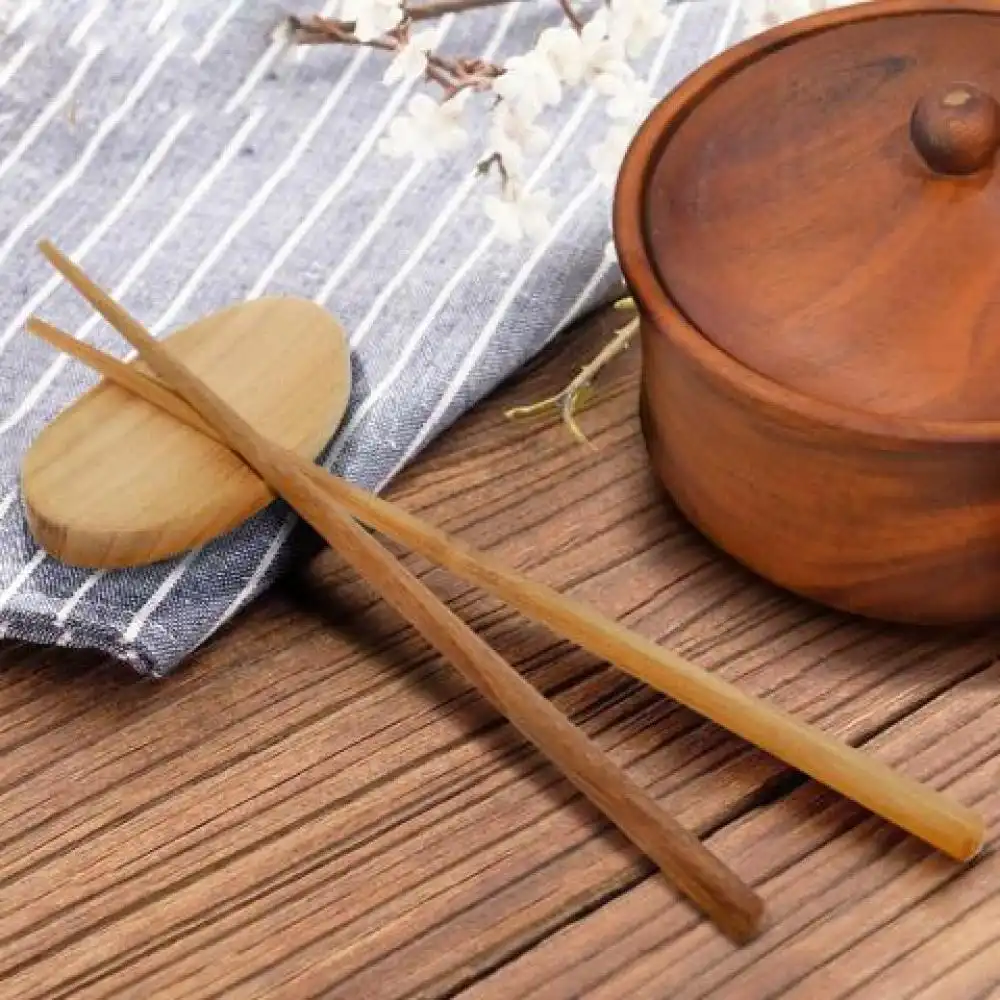
Crafted entirely from solid teak wood, the SUMPIT MIE KAYU is a functional dining utensil designed specifically for consuming noodles and various Asian dishes. Teak wood is chosen for this application due to its natural density and high oil content, which inherently resists moisture absorption and prevents the wood from warping or cracking over extended periods of regular use and washing. Each chopstick measures 24.00 cm in height, providing a balanced leverage point that accommodates standard adult hand sizes and cooking or serving depths. The width and depth both measure 1.00 cm at the widest structural point, tapering gradually toward the distal tips to facilitate the precise gripping of individual strands of noodles, rice grains, and delicate food items. Weighing 0.10 kg per set, these utensils possess a substantial feel in the hand without causing wrist fatigue during extended meals.
The surface of the teak wood is sanded to a smooth finish, removing rough patches while retaining the natural grain patterns and tactile warmth characteristic of hardwood. Unlike metal utensils, the wooden construction does not conduct heat rapidly, preventing the chopsticks from becoming uncomfortably hot when submerged in boiling broth or hot pot liquids. Unlike disposable bamboo alternatives, this reusable utensil is constructed for long-term integration into a kitchen inventory. The square-profile upper shafts prevent the chopsticks from rolling off flat table surfaces when placed down between bites, while the rounded lower sections allow for comfortable finger positioning.
Maintenance of the SUMPIT MIE KAYU requires hand washing with mild soap and warm water, followed by immediate drying with a towel to preserve the integrity of the natural wood fibers. Submersion in standing water for prolonged periods or cleaning inside an automated dishwasher is discouraged, as extreme heat and moisture will degrade the natural oils within the teak. Periodic application of food-grade mineral oil helps maintain the moisture barrier and prevents the wood from drying out in arid climates. The natural golden-brown coloration of the teak deepens slightly with age and continued use, reflecting the physical interaction between the material, natural oils, and food acids.
| Product Info | |||||||||||
|---|---|---|---|---|---|---|---|---|---|---|---|
| Dimension |
| ||||||||||
| Material | Teak | ||||||||||